
Inventory and POS System Architecture
Understand how I structure inventory and POS systems to manage stock, purchases, sales, warehouses, suppliers, transactions, and reporting accurately.
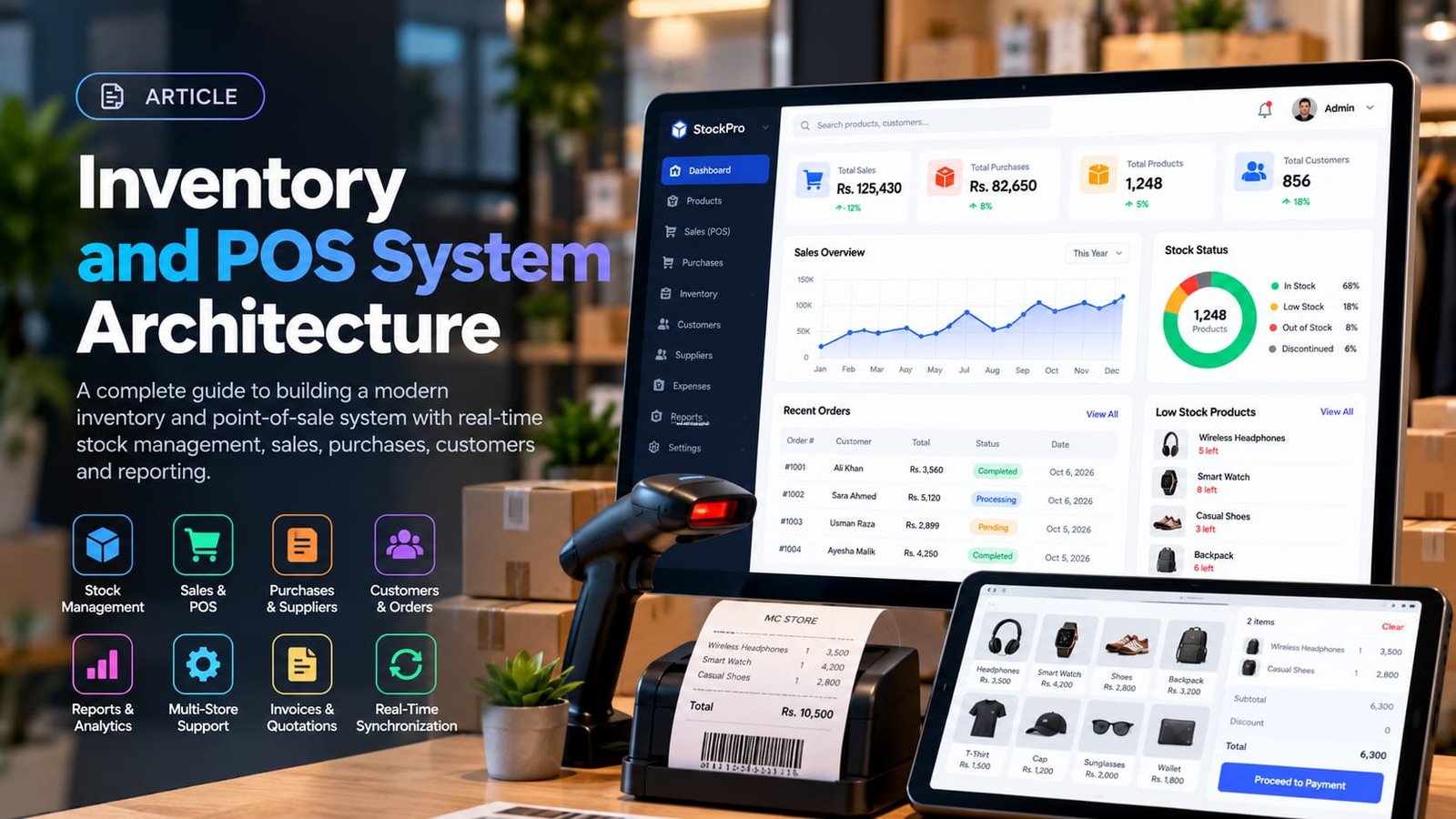
Inventory and Point of Sale systems require careful architecture because almost every transaction affects stock, financial data, and reporting.
A reliable POS system should maintain accurate inventory while still providing a fast checkout experience for staff.
The foundation of the system is the product database. Each product normally includes an SKU, category, purchase price, sale price, tax information, and current stock quantity.
For products with variants, each variation should have its own stock record.
Instead of only storing the current stock quantity, I prefer maintaining stock movement records.
Every purchase, sale, return, adjustment, transfer, or damaged item can create a stock movement entry.
This provides a complete inventory history and makes it easier to investigate stock differences.
The purchase module manages suppliers and incoming stock. When a purchase is received, inventory quantities are updated and the transaction is recorded.
The POS interface should be optimized for speed. Staff should be able to search products, scan barcodes, change quantities, apply discounts, select customers, and complete payments quickly.
Once a sale is completed, stock should automatically decrease and a sales transaction should be created.
Returns should also reverse the relevant inventory movement when appropriate.
For businesses operating multiple branches or warehouses, inventory should be maintained separately for each location.
Stock transfers can then move products from one location to another while keeping a complete record of the transaction.
The reporting module can provide information about sales, purchases, profit margins, stock values, low-stock products, top-selling products, and cashier activity.
Access control is also important. Different users may have permissions for sales, inventory adjustments, purchases, reports, or administration.
A strong POS and inventory architecture provides accurate stock information, reliable transaction history, and better control over business operations.

Musab Afzal
Full Stack Web Developer
Full Stack Web Developer with 2+ years of experience building and maintaining web applications using Laravel, Core PHP, and modern front-end frameworks. Skilled in WordPress theme development, responsive UI design with Tailwind CSS and Bootstrap, and building REST APIs. Currently expanding into Next.js, React.js, and React Native for cross-platform development.
Enjoyed this technical breakdown?
Hire me to engineer similar architectures for your product or check out our client packages.