
From Development to Production: My Web Application Deployment Process
A practical look at the process I follow when moving a web application from local development to a secure, stable, and production-ready environment.
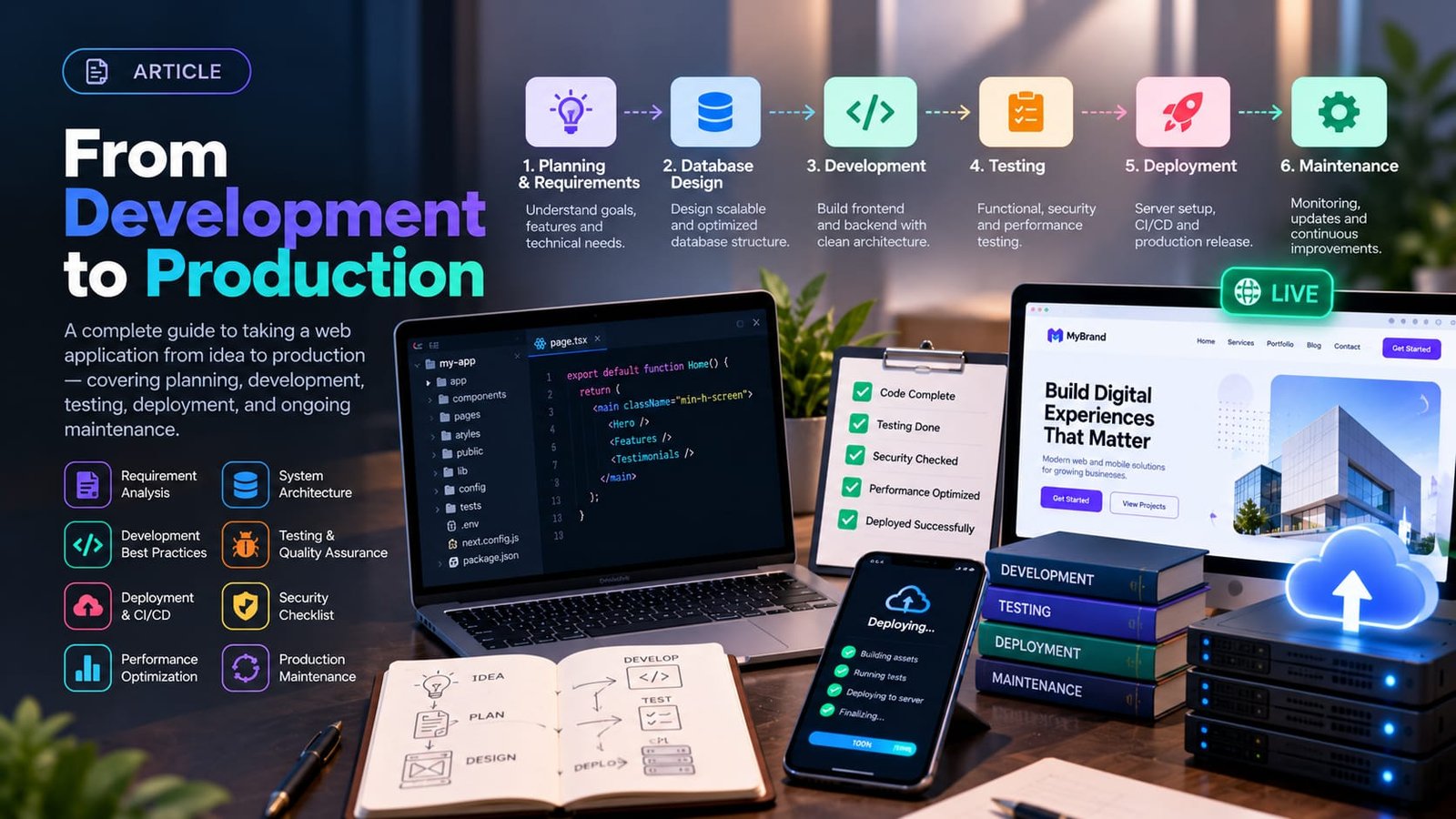
Completing development does not automatically mean an application is ready for real users.
Before launching a website or web application, several deployment, security, performance, and configuration steps need to be completed.
The first step is preparing the production environment.
Environment variables such as database credentials, API keys, email configuration, application URLs, and third-party credentials should be stored securely and should never be committed directly into the source code.
Database migrations should be reviewed before they are executed on the production database.
For applications containing existing data, migrations should be designed carefully to avoid accidental data loss.
I normally use Git for version control so the production deployment is based on a known version of the application.
For Laravel projects, production preparation can include installing optimized Composer dependencies, caching configuration and routes, setting file permissions, running migrations, configuring queue workers, and setting scheduled tasks.
For Next.js applications, the production build should be generated and tested before launch.
Environment variables, API endpoints, image domains, caching rules, and server configuration should also be verified.
HTTPS should always be enabled for production websites.
A valid SSL certificate protects communication between users and the website while also improving user trust.
Email delivery should be tested using the production SMTP configuration, particularly for password resets, account verification, contact forms, and order notifications.
Background jobs and scheduled tasks must also be configured correctly.
If the system relies on queues but the queue worker is not running, important functionality such as email notifications or data synchronization may silently stop working.
Before launch, I test authentication, forms, payments, APIs, permissions, responsive layouts, and major user workflows.
Logging and backups are equally important after deployment.
Applications should have proper error logs, database backups, and a recovery process in case something fails.
The final goal is to move the application from development to production with minimum risk while ensuring that it is secure, stable, optimized, and ready for real-world usage.

Musab Afzal
Full Stack Web Developer
Full Stack Web Developer with 2+ years of experience building and maintaining web applications using Laravel, Core PHP, and modern front-end frameworks. Skilled in WordPress theme development, responsive UI design with Tailwind CSS and Bootstrap, and building REST APIs. Currently expanding into Next.js, React.js, and React Native for cross-platform development.
Enjoyed this technical breakdown?
Hire me to engineer similar architectures for your product or check out our client packages.