
Designing a Complete E-Commerce Admin System
Explore the structure of a complete e-commerce admin system, including products, orders, customers, inventory, discounts, reporting, and role-based management.
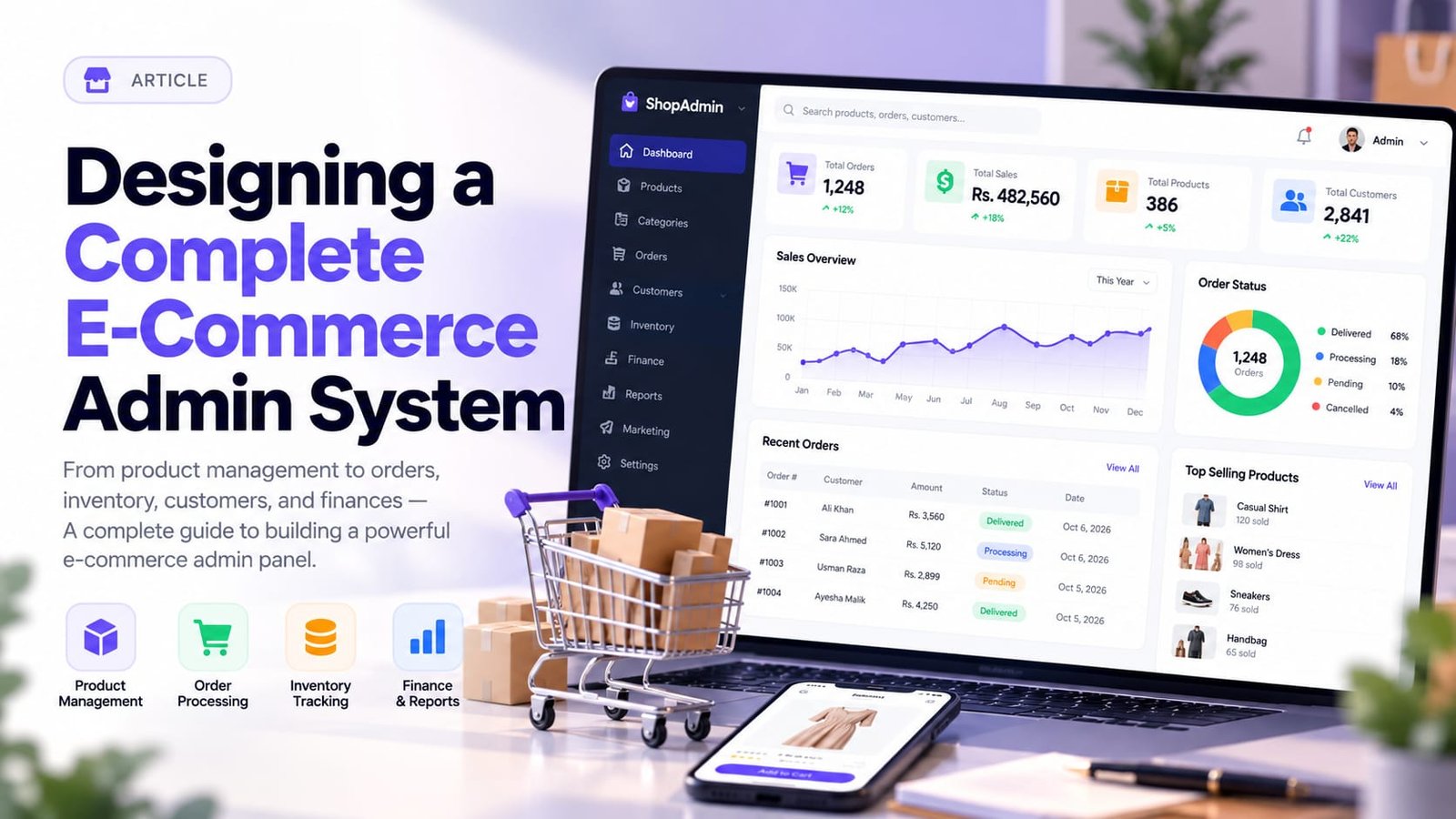
A successful e-commerce platform requires much more than an attractive storefront. Behind the customer-facing website, a powerful admin system is needed to manage products, customers, inventory, orders, payments, promotions, and business operations.
When designing an e-commerce admin system, I begin by identifying the core modules and how they interact with each other.
The product management module normally includes products, categories, brands, variants, attributes, images, pricing, stock, and SEO information.
For stores with multiple product variants, inventory should be managed at the variant level. Each size, color, or configuration may require its own SKU, stock quantity, and pricing.
The order management system should provide a complete overview of each order, including customer details, payment status, shipping information, order items, discounts, taxes, and fulfillment status.
Administrators should be able to update order statuses, add internal notes, print invoices, and review customer history.
Inventory management should automatically update whenever an order is placed, cancelled, refunded, or manually adjusted.
For larger platforms, stock movement logs are useful because they provide a history of every inventory change.
Customer management allows administrators to review customer profiles, order history, contact information, addresses, and account activity.
A complete admin panel should also support discounts, coupon codes, promotional rules, shipping configuration, payment methods, tax settings, and website configuration.
Reporting is another essential module. Administrators should be able to review sales, orders, revenue, popular products, customer activity, inventory levels, and other important business metrics.
Role-based permissions are especially important when multiple staff members use the system. A cashier, warehouse manager, content manager, and super administrator should not necessarily have access to the same functionality.
The user interface should remain clean and easy to navigate even when the platform contains many modules.
A well-designed e-commerce admin system improves business operations, reduces manual work, and creates a centralized environment for managing the complete online store.

Musab Afzal
Full Stack Web Developer
Full Stack Web Developer with 2+ years of experience building and maintaining web applications using Laravel, Core PHP, and modern front-end frameworks. Skilled in WordPress theme development, responsive UI design with Tailwind CSS and Bootstrap, and building REST APIs. Currently expanding into Next.js, React.js, and React Native for cross-platform development.
Enjoyed this technical breakdown?
Hire me to engineer similar architectures for your product or check out our client packages.